





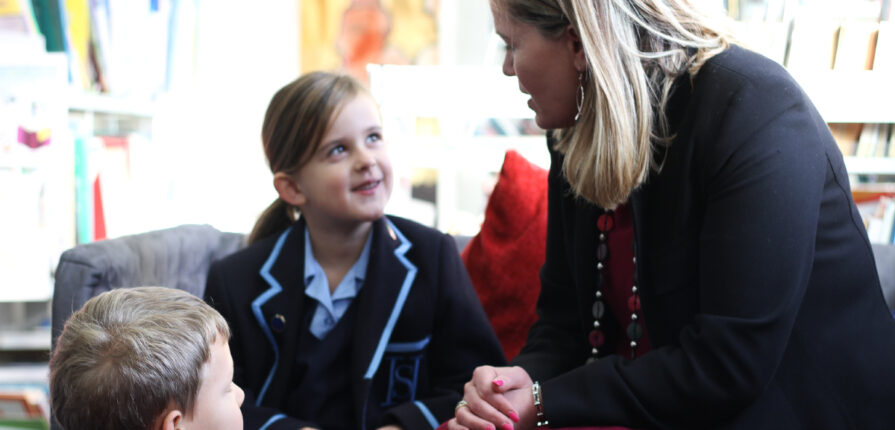
Independent school settings are often uniquely positioned to fit the individual; we offer high-quality education to pupils from a wide range of backgrounds and learning profiles. With smaller class sizes, closer teacher-pupil relationships, and a greater degree of curriculum flexibility, teachers are given a wonderful opportunity to support pupils who find traditional classroom-based learning particularly challenging. Increasingly, schools are also partnering with organisations known for inclusive online education to enrich this personalised approach with thoughtful practice and tools that respect each child’s pace and profile.
Yet even in the most nurturing environments, some pupils will struggle — and it’s our role as educators to understand those challenges and respond with compassion, creativity, and flexibility.
Recognising the struggle
During my time at Heathcote, I have become familiar with the ‘parental tour discussion’ that includes an explanation of why the current setting hasn’t been ideal for their child (and I am sure many of you have heard similar) and whilst we try to maintain professional perspective, sometimes it is challenging to balance the sadness and empathy we feel for the family and pupil and what we know we can realistically and reasonably offer with regard to the other pupils in the classroom (in our own settings) too. When a pupil struggles in lessons, my experience is that it’s rarely due to a lack of intelligence or motivation. More often, the issue lies in the way the learning is being delivered or how the pupil processes information. These challenges may relate to specific learning differences such as dyslexia, ADHD, autism spectrum conditions, or even social and emotional wellbeing.
In an independent school setting, academic expectations can be high, and many pupils (and often parents) put significant pressure on themselves to meet them. It’s crucial to spot early signs of disengagement, anxiety, or difficulty before they become barriers to learning or self-confidence. Additionally, we need to balance inclusion, intervention and support alongside parental expectations (both those of the pupil who is struggling to engage and the other families in the same class), which (of course) is never easy.
When a pupil struggles in lessons, my experience is that it’s rarely due to a lack of intelligence or motivation
Maximising our impact
Independent schools often have resources and structures that lend themselves well to personalised learning as we are able to see beyond the curriculum and beyond the rigid timetables, which can be more challenging in state schools with larger class sizes, less teacher to pupil time and sometimes further external constraints. To make the most of this, our settings can adopt some key approaches:
Differentiate with intention. A flexible, differentiated approach to teaching benefits not just those who struggle, but all learners. Use a mix of teaching styles — visual, auditory, kinaesthetic — and allow pupils to show their understanding in different ways. Does the outcome need to be written? Could it be diagrammatic for example? Offer choice where possible (teachers are super at using choice where either solution is acceptable) as this will empower all of our students and often the end results amaze us as learners thrive when given creative freedom. Independent schools often benefit from flexibility to adapt or enrich the curriculum; this can be a powerful tool in supporting diverse learning styles and reluctant learners. Online Alternative Provision. Partners such as Gaia Learning advocate precisely this—meeting learners where they are and valuing progress as well as attainment.
Small class sizes and warm environments. Smaller classes allow for more individual attention. Teachers can check in regularly with pupils who need extra support, monitor understanding more closely, and build stronger relationships — all of which are essential in identifying learning barriers early. Don’t underestimate the power of relationships. Pupils are far more likely to thrive when they feel respected, valued, and understood by the adults around them. Consider the classic (and apologies as often overused) INSET tool of ‘think of your favourite teacher’ – aren’t they almost always the ones who showed empathy and warmth and enabled you to showcase your skills in a nurturing environment – anyone voting for the stern, restrictive person … no? Shocking.
Incorporate movement and active learning. Active learning is not just for early years or lower prep — many older pupils benefit from it too. Short breaks, standing desks, movement-based tasks, or outdoor learning can help pupils stay focused and reduce cognitive overload. Consider making this more ‘real’ as part of a lesson, not a designated, designed brain break but a task as part of a mid-lesson breather e.g. cards with Q&As that need to be paired or matched by students moving and engaging with each other to find the solution. In a setting where access to grounds or specialist facilities is more readily available, take advantage of these to vary learning environments and energise lessons.
Foster a culture of effort and resilience. In any educational environment, pupils may feel that anything short of perfection is failure. Teachers play a key role in shifting the narrative towards effort, growth, and progress. Celebrate small wins, effortful learning, and creative thinking — not just high marks – but this needs to be done genuinely, students can sense when something is not truly valued. Make it clear that asking for help is a strength, not a weakness.
Independent school settings are often uniquely positioned to fit the individual; we offer high-quality education to pupils from a wide range of backgrounds and learning profiles
Working in partnership with parents. Independent schools often have strong relationships with families, and this can be hugely beneficial. Use regular communication to share observations, insights, and positive progress — not just concerns. Parents value knowing the tiny things and not just being contacted when things go wrong, establishing true relationships takes time but is worth every minute spent. Parents are experts on their children. Work with them to understand what strategies have helped at home or in previous settings. Regular dialogue can ensure consistency of support and build trust. Having worked in a school many years ago where the Headteacher almost scoffed at the value of parental opinion, I cannot express how wonderful it is to have staff who know how essential it is to build and truly respect a relationship between home and school to ensure maximum benefit for the child. Where appropriate, a simple, shared view of learning and engagement—such as what the Gaia team are building in Gaia Bloom (Gaia Learning’s lightweight online learning platform dashboard that surfaces engagement, wellbeing check-ins and progress in plain language)—can make conversations with families clearer without ever replacing the human relationship.
Targeted support and specialist input. Many independent schools employ learning support coordinators or SEND specialists who can provide small group or one-to-one interventions. This kind of targeted provision can be transformative, especially when embedded within the wider school culture rather than viewed as a separate ‘track’. Ensure staff across the school are trained to recognise and respond to different learning needs. Whole-school understanding is key to creating an inclusive environment where no pupil feels left behind. When we combine specialist provision with gentle, data-informed insight we are better able to notice small changes early and act quickly.
A culture of inclusion and individuality. Perhaps one of the greatest strengths of the independent school sector is the ability to shape a culture that celebrates individuality. Learning doesn’t have to look the same for every pupil, and success shouldn’t be narrowly defined. By valuing a range of talents and nurturing the whole child, schools ensure that every pupil, regardless of learning style or challenge, has the opportunity to feel successful. In an independent school setting, the potential to support pupils who struggle with classroom-based learning is immense. But it requires intention, empathy, and a commitment to seeing beyond traditional measures of success.
Let’s remember: the goal is not simply academic excellence, but confident, curious, and capable learners whether they’re in the classroom full time or flexi online learning with a company like Gaia as they make their way back into the classroom.
By Samantha Scott, Headteacher, Heathcote School. This article has been written in collaboration with Kate Longworth CEO of GAIA Learning and was originally published in SATIPS Prep School Magazine.

Leave a Reply